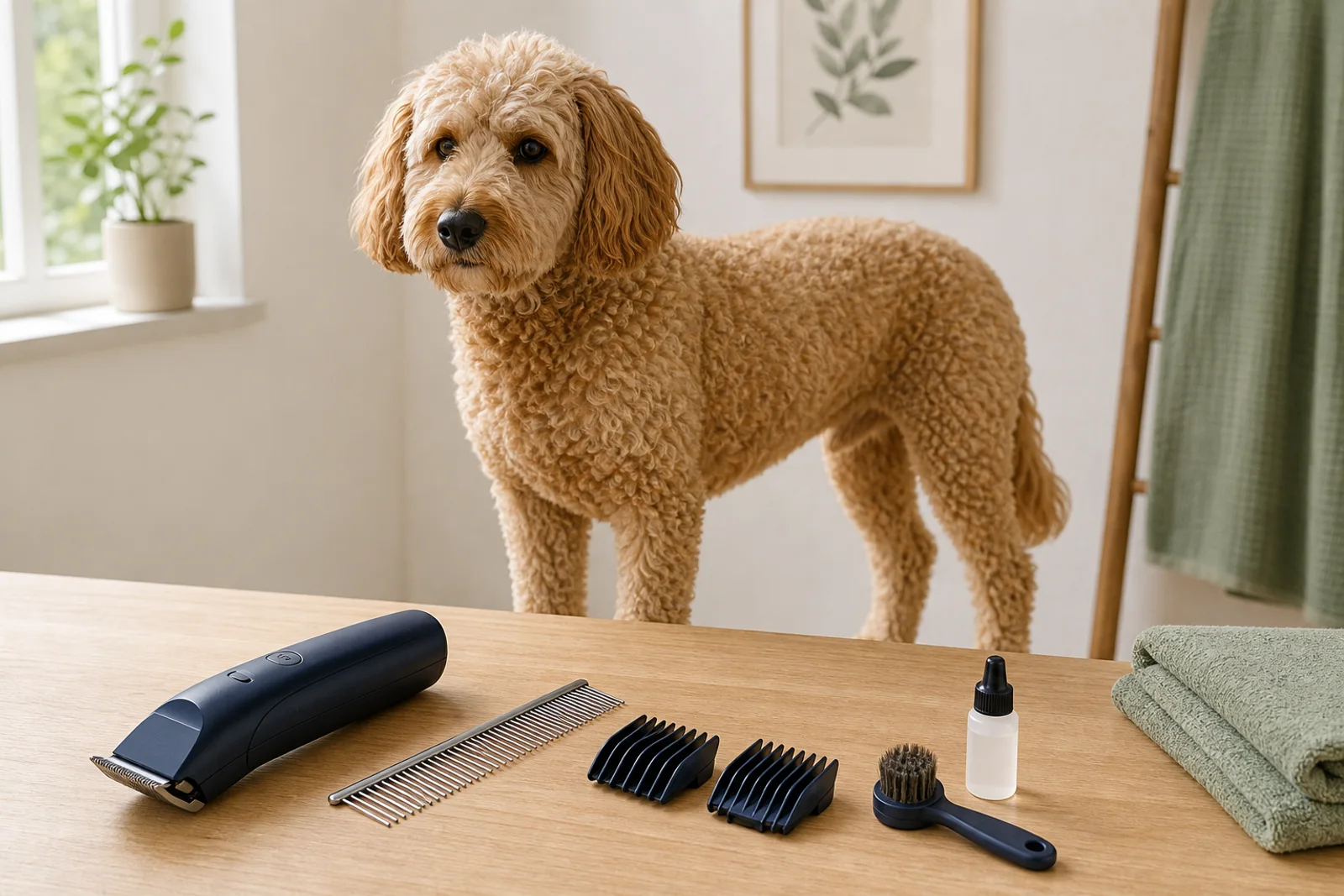
The best dog clippers match the job. Full-size corded dog clippers suit thick curls and full cuts. A light cordless dog clipper is easier around paws and faces.
Dog clippers at a glance
| Pick | Power | Best for |
|---|---|---|
| Wahl KM10+ | Corded, two speeds | Full cuts and thick coats |
| Andis AGC Super 2-Speed | Corded, two speeds | Pro-style value |
| Heiniger Opal | Cordless, up to 240 minutes* | Premium cordless use |
| Oster Turbo A5 2-Speed | Corded, two speeds | A5 blades and heavy work |
| Wahl Bravura 2 | Corded/cordless, up to 4 hours* | Small dogs, faces, and paw pads |
| Wahl Lithium-Ion Pro Series | Cordless, up to 2 hours* | A complete starter kit |
| Oneisall P2 | Cordless, up to 3 hours* | Light use on small and medium dogs |
*Maker-rated runtime; actual battery life varies with speed, coat load, and battery age.
1. Wahl KM10+: Best overall
The KM10+ is a strong first choice for full-body grooming. Wahl lists a 14-foot cord, a #10 detachable blade, and speeds of 3,000 and 3,700 RPM. Corded power is the draw: it won’t fade halfway through a long cut. Guide combs cost extra, and a cord needs care around a restless dog.
2. Andis AGC Super 2-Speed: Best pro-style value
The AGC2 brings a salon-style setup home without a battery. Its speeds are 3,400 and 4,400 strokes per minute. It weighs 17.6 ounces and has a 14-foot cord. The detachable A5-style blade system offers many cut lengths. Owner reports praise long service, though heat, cord wear, and switch trouble also recur.
3. Heiniger Opal: Best premium cordless clipper
The Opal gives you a full-size tool without a cord. Heiniger lists two speeds, a 14.6-ounce weight, a 60- to 80-minute charge, and up to four hours of runtime. Its 59 dB(A) figure is also a maker rating. Owners often praise the balance and battery. The cost is high, and kit contents vary by seller.
4. Oster Turbo A5 2-Speed: Best for a proven blade system
Oster’s Turbo A5 uses a wide range of detachable A5 blades. The maker lists 45 watts and more than 4,000 strokes per minute on high. It targets thick, coarse hair, but weighs about two pounds. Owners also mention noise and warm blades. It suits short work blocks with frequent heat checks.
5. Wahl Bravura 2: Best for paw pads and detail work
The Bravura 2 has a 5-in-1 blade with #9, #10, #15, #30, and #40 settings. Wahl lists two speeds, USB-C charging, and up to four hours of use. Its narrow head is easier to guide around feet, faces, and sanitary areas. It can trim a clean small dog, but it is not the sole tool for a large poodle or dense doodle coat.
6. Wahl Lithium-Ion Pro Series: Best starter kit
This kit includes four guide combs, scissors, a case, oil, and a brush. Wahl claims up to two hours of runtime and gives a five-year warranty. It suits a clean, combed light-to-medium coat. Retail owner reports cite slow cuts and dulling on dense curls. Use a full-size detachable-blade clipper for that job.
7. Oneisall P2: Best low-cost pick
The P2 is a single-speed kit for small and medium dogs. It weighs 13.4 ounces, has six guide combs, and uses a detachable ceramic blade. Oneisall claims a three-hour run and sound below 50 dB, but gives no lab method. Treat it as a light-use tool. Thick or tangled coats can make a budget clipper pull or stall.
How to pick the right dog grooming clippers
Start with coat and job size. A full-size detachable-blade clipper suits curls, dense coats, and whole-body cuts. A 5-in-1 is lighter, but works best on faces, feet, and small dogs.
Professional power or lightweight convenience?
Professional dog clippers favor power, precision, and a sturdy body that can handle repeat grooming. Multiple motor speeds give more control, while a powerful high-torque motor can move through long or dense fur more efficiently. That strength can also mean a heavier, louder product. A lightweight cordless clipper is more convenient around the face, feet, and paw pads, especially on small dogs. Before buying, compare motor type, battery life, and whether spare batteries, blades, and guards are easy to find. A quieter tool may help a nervous dog, but “quiet” does not mean silent. Check whether it can keep running while plugged in.
Types of dog clippers and trimmers
Heavy-duty clippers use detachable blades and suit full cuts on thick coats. Corded dog clippers keep steady motor power through a long grooming job. Cordless dog clippers trade the cord for easy movement. Small pet trimmers use a narrow blade for paw pads, faces, and sanitary areas. Match the tool to the dog's coat; no single clipper is best for every cut.
Corded vs. cordless dog clippers
Corded clippers offer steady power. That helps when pet hair is thick or a grooming session runs long. Cordless dog clippers remove a trip hazard and are easy to turn around the dog's body. Yet battery life can fall under a hard coat load. Check if the battery is replaceable and if the tool runs while plugged in.
Look beyond blade speed. A sharp clipper blade, correct guide comb, available replacement parts, and a good grip matter more than a large RPM number. Ceramic blades may stay cool longer, while common steel blades are easy to replace. Noise figures are not equal unless the blade, speed, distance, and room match. One independent dog-clipper comparison shows why sound and blade-heat results need a defined setup before they can be compared.
Blade selection, cutting length, and guide combs
A #10 blade is a common base blade on full-size dog grooming clippers. Shorter settings need more skill because the blade works close to skin. A guide comb fits over a compatible blade and leaves more coat. Check the listed cutting length, comb fit, and replacement-blade supply before buying. A cheap kit is poor value if a worn blade cannot be replaced.
Noise level, motor power, and weight
Low-noise claims can help narrow a list, but maker tests do not share one setup. A quiet motor can still sound harsh when a loose or dry blade chatters. Weight matters too. Light clippers are easy on the wrist; a heavier body may feel steady through a dense coat. Good balance and a secure grip often matter more than the number on a speed chart.
What owner reports can tell you
Owner reports help flag patterns that spec sheets miss. Across these dog grooming clippers, common praise centers on smooth cuts, easy blade swaps, low noise, and a grip that does not tire the hand. Common complaints include hot blades, weak batteries, pulling on thick fur, and guide combs that flex. Those reports cannot prove how one set of dog clippers will work on your dog's coat, but they can show what to watch during the return window.
Use clippers without hurting your dog
Wash, dry, brush, and comb the coat before clipping. Dirt dulls blades, while knots catch guide combs. Don’t force a blade under a tight mat. A professional groomer can remove severe mats with less risk to the thin skin hidden below.
Keep the flat of the blade against the coat. Touch the metal often. If it feels hot on your skin, swap it or let it cool. Stop if your dog twists, pants hard, snaps, or tries to escape.
Paw pads need extra care:
- Ask a groomer or veterinary team member to show you the motion first.
- Use a narrow blade and skim hair level with the pads; never dig between toes.
- Stop if you see redness, a cut, swelling, or a foreign object.
The AKC’s home-grooming guidance also advises a small, narrow blade for pad hair and professional instruction before sensitive work.
Clean blades cut better
Brush pet hair from the blade after each use. Add blade oil as the manual directs, run the tool for a few seconds, and wipe off extra. Store blades dry. A clipper blade that still pulls may need sharpening or replacement. Coil a power cord loosely; do not wrap it around the clipper. This small care routine protects the motor and makes the next home grooming session easier.
Dog clipper FAQs
Are cordless clippers strong enough for thick coats?
Some cordless clippers are. The Heiniger Opal is a full-size cordless dog clipper, while small 5-in-1 tools are better for detail work. Rated battery life does not show how a battery will fare under a dense coat, so keep the coat clean and fully combed.
Can I use human clippers on my dog?
Pet clippers are the better choice. Dog coats vary in texture and density, and pet models offer suitable blades, combs, and care instructions. A human clipper may snag fine undercoat or lack the parts needed for safe coat lengths.
Which blade is safest for paw pads?
There is no safe blade without good technique. Use a narrow pet trimmer only after a groomer or veterinary staff member shows you how. Keep it flat, work where you can see, and never probe into the webbing.
Browse more Dog Pile 95 guides, including our dog beds for better rest, dog foods for sensitive stomachs, and Dog Is Human review.